Well they do vomit it, just without human assistance. FWIW though, a honeybee produces about a single teaspoon in its whole life, and also tame honeybee colonies tend to psuh out natural honeybee populations, so whether it’s ethical to eat honey or not is a fair question.
FWIW though, a honeybee produces about a single teaspoon in its whole life
Keep in mind though that a honey bee worker only has a working lifespan of a few weeks (though they can survive for months if born during the cold off seasons where they stay huddled in the hive), and each hive has between 40,000 and 80,000 bees. Kept hives also don’t need as much of the honey they produce since the beekeeper can control for climate, colony size, and other factors that increase consumption.
Pushing out native bees is definitely a major problem, I agree on that, though beekeepers should be managing their colonies to prevent them from splitting and creating new hives.

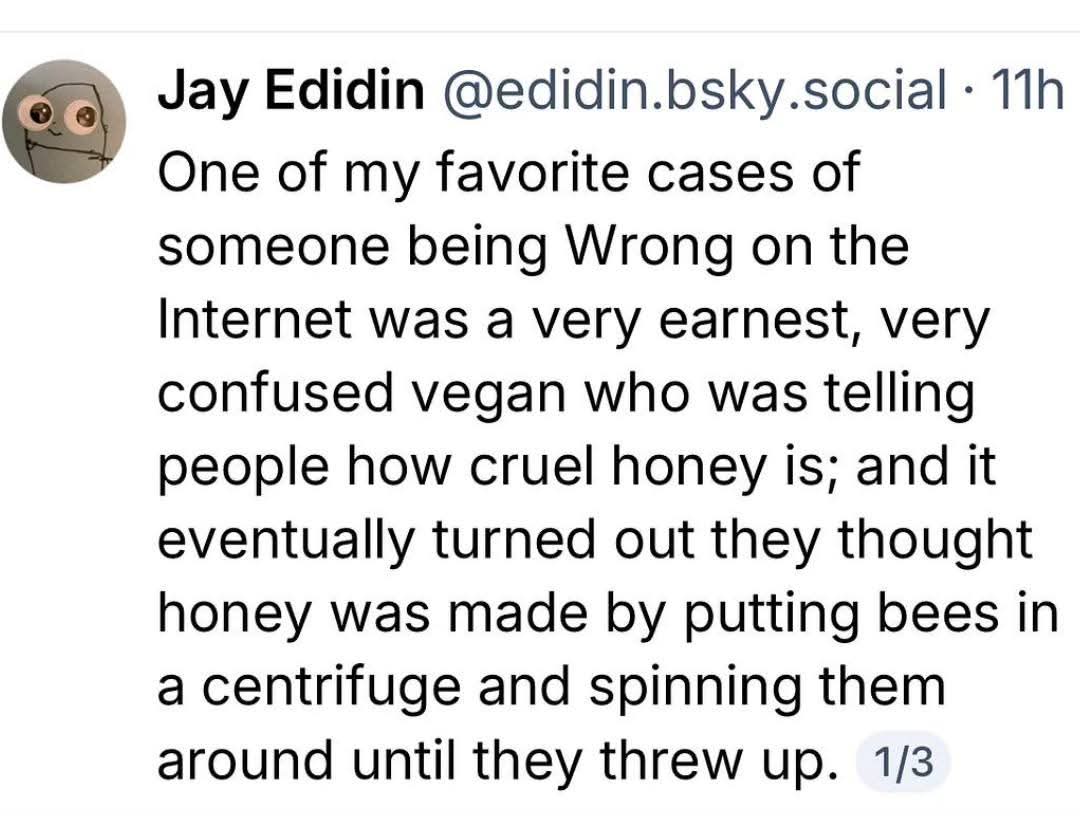
Wait then how DO they make honey?
Well they do vomit it, just without human assistance. FWIW though, a honeybee produces about a single teaspoon in its whole life, and also tame honeybee colonies tend to psuh out natural honeybee populations, so whether it’s ethical to eat honey or not is a fair question.
Keep in mind though that a honey bee worker only has a working lifespan of a few weeks (though they can survive for months if born during the cold off seasons where they stay huddled in the hive), and each hive has between 40,000 and 80,000 bees. Kept hives also don’t need as much of the honey they produce since the beekeeper can control for climate, colony size, and other factors that increase consumption.
Pushing out native bees is definitely a major problem, I agree on that, though beekeepers should be managing their colonies to prevent them from splitting and creating new hives.
https://youtu.be/tKweqxWUC38
Unless you’re in Eurasia, the natural populations aren’t honeybees.
No that’s Minions right?